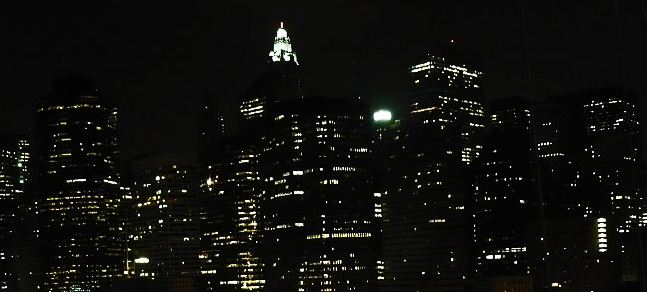
When evening came, I settled into my room above the New York City skyline after a day of research. My day’s mission was to visit sites, take pictures, and gather documents about the city’s sculptural landscape, specifically the statues around town: Rockefeller Center, the Meat Packing District, Central Park and others. Ever since childhood, I had a fascination with statues and now found myself on the throes of writing an article titled, “Urban Representation and Socioeconomics of the Statue.” I’d been working in my hotel room for hours, poring over architectural articles, essays, and pictures attempting to capture facts. The pressure was on, having chided myself all summer to complete a draft before the start of the fall semester.
Aram Khachaturian’s Toccata in E flat minor played in the docking station on the business desk. The piano’s fast-paced tempo, occasional booming chords and delicate runs were the perfect soundtrack to the city of rushing people. At its conclusion, I rubbed my bleary eyes and arched my stiff back. Aware of the late hour, I turned off the music, set my laptop to sleep mode and rose from my chair. I walked to the window to view the expanse of the city’s somnolent buildings along Murray Hill.
While vacated offices were scattered among the dark spaces, other spaces were still lit – employees burning the late-night oil, custodial staff cleaning. In the dark matter, the Midtown skyline was aglow with the lights of apartments filled with faithful tenants.
A resident of suburban southern California, I was a voyeur to the night’s view. Each time I visited the city, looking at people in their habitats became my peaceful pastime. As I stared into their living rooms, their kitchens, their bedrooms, their bathrooms, I concocted their lives purely by observance.
Atop a building, a middle-aged woman stepped from her impressive deck back into her living space, likely to answer a phone call from her child in Florida.
A thin girl finished cleaning the dishes in her sink. She pulled back her hair, presumably because her air conditioning wasn’t working on this warm summer night and, as a struggling actress, she couldn’t afford a new one.
In the apartment next to hers, two silhouettes behind smoked glass danced in a shower together. Husband and wife, or were they two men? Lovers? An affair? Their standing bodies were entwined, then were separated. One leaned onto the glass, then back into the shower, pushing the other against the shower wall. Their passion left me envious. They didn’t care if I or anyone else was watching. They were in it for themselves.
I thought about TJ. I wanted to be back in California, in bed with him. For the few days I’d been in the city, I missed his warm breath on my ears, his firm hands pressing on my shoulder blades, his tongue on my neck.
My eyes wandered to another direction. In another high rise, I watched an elderly woman in a walker. She moved slowly from her living room into a hallway. Her figure was visible in the light emitted from her television. She was alone.
I glanced away, heading to the bathroom to brush my teeth but I stopped. What was it I’d just seen? I turned back to the window. I looked again for the old woman’s apartment but lost it in the multitude of lights. There it is. I stared for a few moments more. From the angle of her window, I saw her shuffling feet disappear into the hallway. At this late hour my eyes were playing tricks on me.
I walked to the bathroom, brushed my teeth, changed into a t-shirt and boxers, checked the door locks, turned off the lights, and landed on the bed. In the dark, the lights glowed brighter, like a universe of stars, the stars I stared at from my window as a child. In the manmade version, I tried to make out the constellations; Orion, Andromeda, Perseus. Above the humming of my air conditioning unit, the faint sirens and taxi horns reminded me of my simulacrous moment.
For a short time I stirred, unable to sleep. I reached for my phone on the nightstand. I turned it on to see if TJ had left any texts. Nothing. The screen read 1:24 am. It was too early for bed on West Coast time. I turned it off and faced the windows. I could see the tops of other buildings. Some of the lights from other high rises were higher than my floor. Perhaps I’d been someone else’s pastime, watched from one of those buildings. Like counting sheep, I checked each lit window for as long as I could, one by one. No one.
Then I thought about the multitude of darkened windows. They outnumbered the lit ones by nearly four to one. Was someone watching me from the dark? The chances were greater than I initially realized. I slowly pulled the sheets above my chest at the thought. Even in the dark I felt exposed.
Ten more minutes passed without as much as a yawn. I couldn’t force myself to sleep. So I sat up and stared out of the window. A helicopter moved across the sky above the buildings to the west. It hovered for a moment shining a spotlight on something below. I crawled out of the bed to watch. I was back at the window, leaning on the sill. Watching. The copter turned off the spotlight before I got a chance to see where it was shone below. The craft flew north, eventually disappearing into the skyline.
I looked back at the buildings in front of me. The shower where two bodies made love was now dark. Were they asleep together? Had they met each other’s expectations? My mind was still wandering, wondering.
I needed to see the old lady. Observing her frailty, I needed to know her story. I looked up and down the stories to find her window. There it was. The glow from the television still kept the room lit. She sat in a recliner chair, motionless. I couldn’t help but think of this displaced woman in a high rise. She appeared bucolic, provincial. She should have been sitting in a living room in Charlotte, or Savannah, or Naples. She sat quite like a figure in a portrait. Was she still alive?
And then I saw it.
Something was outside of her window. A shape moved into the frame. I leaned into the glass, considering some rationale that it was a bug was on my window, or condensation formed by the air conditioner and the warm, humid air outside. Neither. I rushed in the dark to grab my glasses from the executive desk. My fingers fumbled through papers and books until I found them. I put them on and ran back to the window.
I looked again at the old woman’s apartment. Immediately to the right, her unit turned outward forming a right angle. Something was there in the corner, looming. It leaned again. I could make out the shape of a distorted head peering into her window. The woman remained still in her recliner facing her television, unaware of the onlooker.
I quickly eyed the building to assess how many floors were below hers. I was above her on floor twenty-six. I could make out approximately twenty. How could someone be that high from the ground, watching? It wasn’t humanly possible.
He moved again. I discerned the shape of a shoulder, then an arm, an unusual, spidery arm. With a better view of his body, his head was proportionally large for a human. I squinted to see more but I lost his shadow momentarily when the old woman turned off her television. The window went black. I fixated on the spot and was unable to see him anymore.
But the window was alight again. The woman had reached from her recliner to turn on a lamp. She slowly rose from her chair and faced the window. My heart raced. Was she about to be attacked? I was helpless to warn her.
As she turned toward the hallway in her walker, he leaned back in, watching. No! I banged on the window as he watched the woman creep down her hallway. With each slow step, he crept along the ledge. I could see that his scale was the same size as the window frame. He couldn’t have been any less than say eight feet tall. My head tingled. I didn’t know what I could do to distract whatever this thing was.
There was a chime on my phone, a text chime. The phone!
I ran to the nightstand, grabbed it, and ran back to my window. From the creature’s stature, he was intent on violating the woman. He raised his arm to break the glass.
Snap!
I was blinded by the flash of my camera.
He stopped. I saw his head lurch in my direction but he turned back to the window.
Snap!
He turned again, this time snapping his head. Was it working? I closed my eyes.
Snap!
Quickly I looked to the woman’s window. This time he was gone. For several minutes I looked at every window that I could on that building. Nothing.
Was I imagining what I saw? When I was younger, I remembered hearing my cousin in Wisconsin talk about the nymphs that lived in the trees, their glowing eyes peering from the branches in the late late hours of the night. He was the only one who saw them. He insisted that on a few occasions, he could see them from his bedroom window at night. Although no one else could ever confirm his claims, we decided that he was mad when my aunt found him wandering in the park behind his neighborhood staring into the trees in his pajamas. He didn’t speak for days. I hadn’t talked with him in years. Only at this moment did I wonder if he was right.
I looked again at the woman’s window. It was dark. She must have gone to sleep.
I was restless as I returned to the bed. I settled under the sheets doubting myself more than anything. Did monsters still exist? Such ideas were relegated to a childhood wilderness that couldn’t debunk the fantastic. We were now adults in the cities of new science. Of the thousands of digital eyes upon Manhattan, surely science would have some explanation. Still, that silent monster mocked me.
But what if I were the only witness? I couldn’t explain what I’d seen with any credibility to anyone if I tried. Would I be forced to remain silent? At my age, I was uncomfortable with the notion of secrets. If I was forced to repress what I saw, would I end up like my forgotten cousin? I wondered if my face would become silent, defeated, belittled, and worse yet, uninspired.
As I further contemplated what had happened, I caught the movement of a shadow on the ceiling of my room. A figure. Instinctually, I looked to the window for the source. It was him, outside of my hotel window!
I cowered, the entirety of my body pressed against a pillow. My mouth was agape. I tried to scream but heard only air. He leaned closer and closer until he pressed himself against the glass. I was petrified.
I couldn’t move my body. My spine tensed as if pricked by thousands of needles. I was hyperventilating. My erratic breathing broke my mesmerized state.
I didn’t know if the creature could see me watching him but I sensed that he needed me to see him, to acknowledge him. He stood in the window frame motionless. In the dark, my eyes deceived me. His head was exaggerated and bald. I could see slight movements in the silhouette of his head. It was as if the muscles and skull inside were speaking. I thought I saw him move, but rather, it was his mind that I must have seen move. Condensation formed on the glass in front of his mouth. It thickened with each irregular breath.
In his shadow, I could see his tatters fluttering in the breeze. His head blended into a rotund midsection. His long legs and arms contrasted with the rest of his body. He turned his head as if to survey the frame around the window. I could see the profile of his grotesque body shift from one leg to another. He looked at the humming air conditioner in the adjacent window. He leaned toward it.
I found the strength to reach for the nightstand beside me, feeling for my phone. As my fingers fumbled to grab it, I realized how badly they were shaking. I heard the squeak of his fingers sliding down the wet glass above the air conditioner. The toccata was deafening. I couldn’t bear the discordant sound. I raised the phone in front of my face.
Flash!
In the momentary light, I saw him, the Pantagruel of my childhood, the grotesque, deformed monster that my mind had stored away all these years. I saw in his face the bulbous end of his nose, his protruding eyes, the absence of a neck.
Flash!
His oversized foot slipped from the ledge as the light struck him. His mouth open wide, I could see the back of his throat behind rows of teeth.
Flash!
He slipped off of the ledge and was gone.
I paused but then ran to the window. I searched, unable to spot him until I saw a chair fall on a deck below. Then his shadow, silhouetted by the lights behind him, dashed along a rooftop. With inhuman agility he leapt to another rooftop several stories below. I followed him until he landed at street-level. As a city bus approached the intersection, he lurched in front. The brake lights flashed. With no time to react, the creature suddenly disappeared under the bus as it skidded partway into the intersection.
I pressed my face on the glass a mere centimeter from the spot on which his face was pressed only moments ago. He was surely dead. I waited to see. No one exited the bus to investigate. Perhaps they were too afraid. As the light turned green the bus pulled forward slowly, cautiously, as carbons spewed from its exhaust. In the spot where a carcass should lay, I saw nothing. Nothing. He was gone.
Was this a product of my imagination? What did I just see? I was torn in my uncertainty. I couldn’t take my eyes off of the spot until I realized that I’d pulled at my t-shirt, nearly stretching it to my knees. I let go and adjusted the neckline. It had already left a mark on the back of my neck. I turned to the window to see four vertical marks in the condensation. My fingers touched at them on the other side of the glass. Was this real?
When I awoke the following day, the sun had already burned off the condensation. I’d overslept. I frantically packed and showered hoping not to be late for my flight back to California. In the taxi, my driver was silent. I caught his gaze briefly in the rearview mirror before he began to talk on his phone in some other language.
The phone. I hadn’t thought to review the photos from the night before! I pulled the phone from my shoulder bag and searched through the apps. When I opened my gallery, there they were. I opened one of the shots to see the detail, then another. To my chagrin, the reflection of the flash on the window washed out anything that was on the other side – except for the last picture. In the last I saw my own reflection in the glass. I looked closer realizing that it was a distortion of me. I could see that my horrified expression was superimposed with his. One face blended into the other, neither any clearer than the other. My face and the face of the Pantagruel on the other side of the glass were one in the same.
The same fear was exposed in both of our eyes, one fear on the outside, one fear on the inside, one imagined, one deliberate. Neither was enough to define completeness anymore. What I tried to hold onto, the only evidence of the moment, was evasive, inconclusive.
As the taxi driver cavalierly navigated through traffic, I couldn’t accept that the Pantagruel was a figment of my imagination. I recalled how I saw him in the flesh. As I stared out of the taxi at the city dwellers rushing about, I wanted to connect with someone’s eyes. I needed a sign that they too had seen him. I hoped that someone could see in my eyes that I shared their secret, that in numbers we could find a rational explanation. In whatever brief connection I tried to make with someone, I needed to know that they too were conflicted.
The taxi merged onto the turnpike. I looked above me to the tops of the buildings. Searching. I recognized one or two of the Romanesque statues and gargoyles from my research. Though these monsters were symbols, they were visible, tangible. But were they too alive? No, they were different. They had no impact on my disposition.
I realized that repressing the night, the night of the Pantagruel, was futile. I couldn’t dismiss it. The creature still had the power to impress upon the new imagination that he was alive atop the buildings, that the Manichean memories from a past collective childhood were still real. He was still alive. He knew that I knew. That was enough for him. Despite my statuesque reason, he was and would remain alive.




 literophanes.com